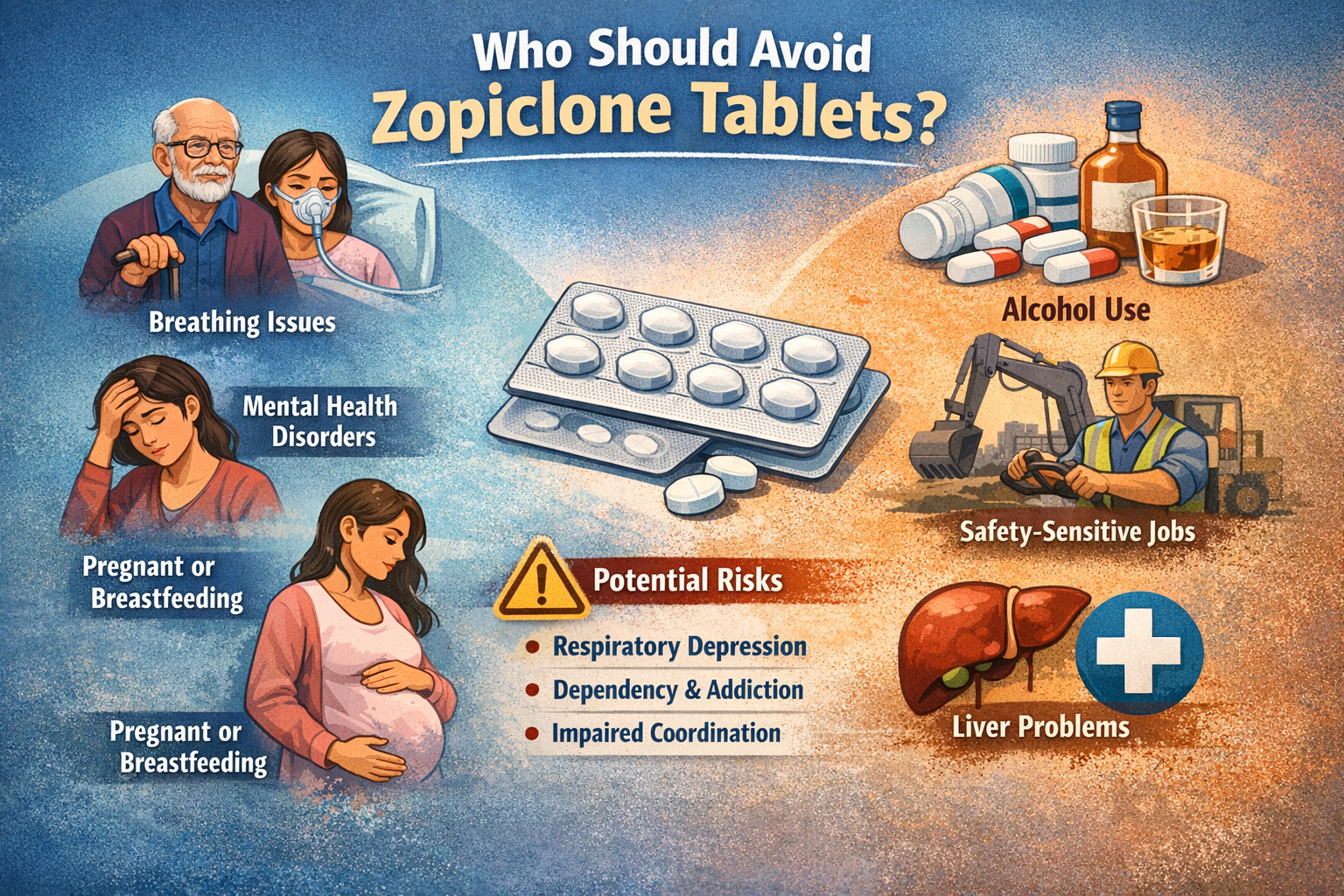
Sleep medicines can be helpful when used carefully, but they are not suitable for everyone. Understanding who should avoid taking Zopiclone tablets is essential for protecting long-term brain health, breathing safety, and emotional balance. As a short-acting hypnotic, Zopiclone works on the central nervous system and can interact with existing conditions, daily habits, and other medicines in ways that increase risk.
From an experience-based clinical perspective, many sleep complaints can be improved through behavioural changes, stress regulation, and circadian rhythm support. For specific groups, however, Zopiclone use may worsen outcomes rather than improve sleep quality.
Who Should Avoid Taking Zopiclone Tablets?
People with breathing-related disorders should approach this medicine with caution. Conditions such as sleep-related breathing problems may be aggravated because Zopiclone can relax airway muscles and suppress respiratory drive during sleep. Medical literature notes that sedative hypnotics may increase nighttime breathing irregularities in vulnerable individuals.
Those with liver impairment are also advised to avoid or strictly limit use. The liver plays a key role in metabolising Zopiclone, and reduced liver function can lead to prolonged sedation and next-day cognitive impairment. Clinical pharmacology studies highlight slower drug clearance in such patients.
Individuals currently prescribed 10mg zopiclone without reassessment should seek medical review, as higher strengths may increase the likelihood of side effects such as confusion, memory disturbance, and impaired coordination.
Who Should Avoid Taking Zopiclone Tablets?
Mental health history is another critical consideration. People with past or present depression, anxiety disorders, or substance dependence may experience worsening symptoms or psychological reliance. Evidence from psychiatric research shows that sedative hypnotics can mask underlying mood disorders rather than resolve sleep-related causes.
Older adults are often more sensitive to central nervous system effects. With age-related changes in metabolism and balance, the risk of nighttime falls, daytime drowsiness, and attention deficits increases. Geriatric sleep guidelines consistently recommend non-drug approaches as first-line management.
Some individuals explore information via zopiclone direct uk sources, but it remains essential to interpret such information through a qualified healthcare lens rather than self-assessing suitability.
Who Should Avoid Taking Zopiclone Tablets?
Pregnant or breastfeeding individuals should generally avoid Zopiclone unless explicitly advised by a medical professional. Research indicates that sedative medicines may cross biological barriers and affect infant alertness or feeding patterns.
People who consume alcohol regularly should also avoid concurrent use. Alcohol and Zopiclone both depress the central nervous system, and combined use has been associated with impaired judgement and reduced reaction time. Clinical safety data confirm increased sedation when both are taken together.
Those planning to order zopiclone online uk should first understand that medical screening is a safety requirement, not a formality. Responsible use depends on personalised risk assessment rather than convenience.
Special Situations Where Avoidance Is Recommended
Certain occupations require sustained alertness and coordination. Drivers, machine operators, and individuals in safety-critical roles may experience delayed reaction times even after a full night’s sleep. Occupational health research confirms residual sedative effects with night-time hypnotics.
People with neurological conditions, including seizure disorders, may be advised against use due to altered brain excitability. Similarly, individuals with kidney-related concerns should seek specialist advice, as drug metabolites may accumulate.
The availability of zopiclone 10mg information online does not replace medical judgement. Dosage suitability varies widely between individuals.
Drug Interactions and Long-Term Considerations
Zopiclone can interact with medications used for pain management, mental health, and allergies. Combining multiple sedating medicines increases the risk of excessive drowsiness and impaired cognition. Pharmacovigilance data confirm higher adverse event rates with polypharmacy.
Long-term or repeated use may also affect natural sleep architecture. Sleep research shows that reliance on hypnotics can reduce restorative deep sleep stages over time, leading to non-refreshing sleep.
People searching phrases like zopiclone uk buy should pause to evaluate whether non-pharmacological sleep support may be safer and more sustainable.
Safer Alternatives for At-Risk Individuals
For those who should avoid Zopiclone, evidence-based alternatives include:
- Sleep hygiene optimisation, such as consistent sleep timing
- Cognitive behavioural therapy for insomnia, supported by clinical trials
- Stress regulation techniques, including breathing exercises and mindfulness
- Environmental adjustments, like light exposure management
Clinical sleep medicine consistently ranks behavioural approaches as effective and safer for long-term outcomes.
FAQs
- Is Zopiclone safe for people with breathing problems?
Medical studies show sedative hypnotics can worsen nighttime breathing in susceptible individuals.
- Can older adults take Zopiclone safely?
Geriatric guidelines state older adults have higher risk of falls and confusion with sedative medicines.
- Does Zopiclone affect mental health conditions?
Psychiatric research indicates sedatives may worsen depression symptoms in some patients.
- Is alcohol safe to combine with Zopiclone?
Clinical safety data confirm combined use increases central nervous system depression.
- Are non-drug sleep treatments effective?
Randomised trials show behavioural sleep therapies improve long-term sleep quality.
Conclusion
Who Should Avoid Taking Zopiclone Tablets? As someone who regularly speaks about responsible sleep health, I encourage readers to prioritise understanding over shortcuts. Real rest comes from aligning biology, lifestyle, and mental wellbeing. Medicines have a place, but informed caution, professional guidance, and sustainable sleep habits always create stronger, healthier outcomes in the long run.