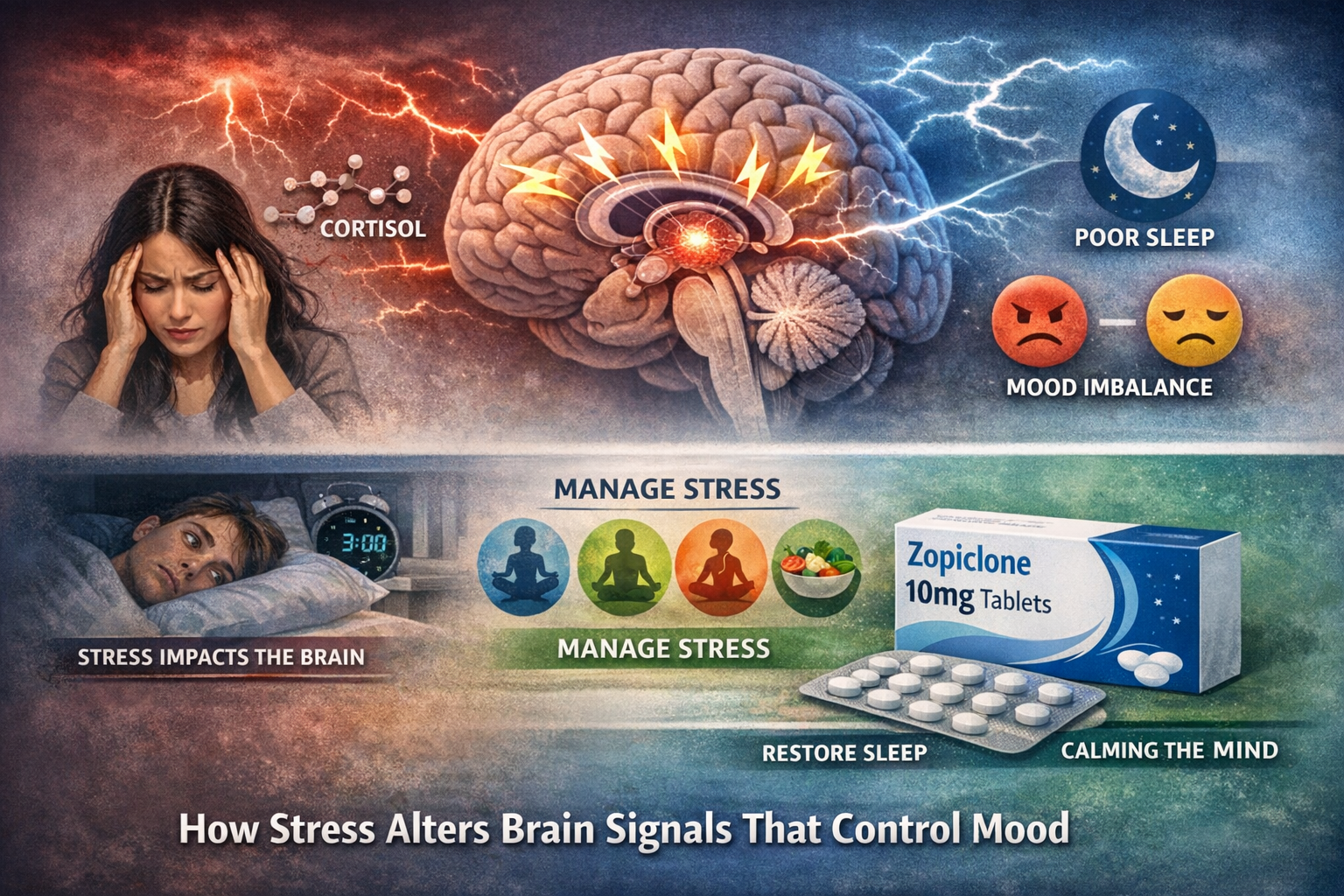
zopiclone 10mg sits at the centre of many conversations about sleep, yet understanding mood begins earlier with how stress rewires brain signals. Chronic mental pressure activates complex neural pathways that connect the emotional brain with hormonal systems. When stress persists, these pathways stop communicating smoothly, leading to irritability, low mood, poor focus, and disturbed rest. For health-conscious readers, recognising these internal changes is the first step toward balanced mental wellbeing and restorative sleep awareness.
Stress does not remain a mental event alone. It becomes biological. The brain interprets ongoing pressure as a threat, triggering chemical messengers that alter emotional regulation. Over time, this shift can affect how we respond to daily challenges, how deeply we sleep, and how resilient we feel emotionally.
The Neuroscience of Stress and Mood Signalling
Stress activates the hypothalamic–pituitary–adrenal axis, a communication loop linking the brain to the endocrine system. This loop releases cortisol, a hormone essential for survival but harmful when constantly elevated. Excess cortisol interferes with neurotransmitters like serotonin and dopamine, which are responsible for emotional balance and motivation.
The amygdala, the brain’s fear centre, becomes more reactive under stress. Meanwhile, the prefrontal cortex, which governs reasoning and emotional control, becomes less efficient. This imbalance explains mood swings, anxiety, and emotional fatigue often reported during long periods of stress.
How Stress Alters Sleep-Wake Communication
Sleep and mood share a deep neurological connection. Stress disrupts circadian rhythms by interfering with melatonin release, delaying sleep onset and reducing sleep depth. Fragmented sleep then feeds back into mood instability, creating a cycle that becomes difficult to break.
Some individuals explore options like zopiclone 7.5 mg tablets when awareness of sleep disruption increases, though understanding the neurological cause of disturbed rest remains essential. Sleep is not just rest; it is active brain repair, emotional processing, and memory integration.
Hormonal Imbalance and Emotional Reactivity
Under stress, adrenaline and cortisol dominate hormonal signalling. These hormones prioritise survival over emotional stability. As a result, the brain reduces signals related to calmness and emotional nuance. This explains why stressed individuals may overreact to minor issues or feel emotionally numb.
In some discussions around sleep management, the term 7.5 zopiclone appears as people search for rest-based solutions. However, emotional regulation improves most sustainably when stress hormones are brought back into balance through lifestyle alignment, consistent sleep timing, and psychological safety.
The brain requires predictability to regulate mood efficiently. Irregular routines, constant screen exposure, and emotional overload disrupt this predictability, reinforcing stress-driven neural patterns.
Stress, Cognition, and Behavioural Shifts – zopiclone 10mg
zopiclone 10mg is often mentioned in the context of sleep awareness, yet cognitive clarity depends heavily on stress regulation. High stress reduces hippocampal efficiency, affecting memory and learning. Decision-making becomes impulsive, and emotional reasoning weakens.
Health-conscious readers increasingly look beyond quick fixes and seek education around why sleep and mood deteriorate together. Understanding the stress–brain–sleep triangle empowers individuals to make informed lifestyle changes that support long-term mental stability.
Rebalancing Brain Signals Through Awareness – zopiclone 10mg
zopiclone 10mg discussions frequently arise when stress-related sleep issues affect daily life. From a neuroscience perspective, restoring balance involves calming the nervous system. Techniques such as controlled breathing, structured routines, and reduced cognitive overload help normalise brain signalling.
Many readers researching purchase zopiclone online are actually seeking relief from the mental exhaustion caused by unmanaged stress. Awareness-based strategies, when combined with medical guidance, support healthier emotional regulation and improved sleep quality.
Lifestyle Factors That Amplify Stress Signals
Urban living, extended screen exposure, irregular meals, and constant connectivity keep the brain in alert mode. This state prevents emotional decompression. Over time, the nervous system forgets how to switch off.
Search trends sometimes include phrases like zopiclone 7.5 mg price, reflecting concern around sleep disruption rather than understanding stress physiology. Education around brain health helps reframe sleep as a biological necessity rather than a luxury.
Nutrition, movement, and social connection all send calming signals to the brain. These signals counteract stress hormones and support mood stability naturally.
FAQs
How does stress affect mood regulation in the brain?
Stress alters neurotransmitter balance, and studies show cortisol directly influences emotional processing centres.
Can poor sleep worsen emotional stress?
Sleep deprivation increases amygdala reactivity, which has been observed in neuroimaging research.
Is emotional fatigue linked to brain chemistry?
Yes, chronic stress reduces serotonin activity, a fact documented in neuroscience studies.
Do lifestyle habits influence stress signalling?
Regular routines help stabilise circadian rhythms, according to sleep research findings.
Can awareness improve emotional resilience?
Mindfulness practices have been shown in clinical studies to reduce stress hormone levels.
Conclusion – Influencer Perspective
zopiclone 10mg often enters conversations when stress and sleep collide, but as someone who regularly educates audiences on mental wellbeing, I believe awareness is the real starting point. When we understand how stress rewires our brain signals, we stop blaming ourselves for emotional imbalance. True influence lies in guiding people toward informed choices, calmer routines, and respectful understanding of sleep as a pillar of mental clarity and emotional strength.